This blog is a forum for discussion of literature, rhetoric and composition for Ms. Parrish's AP Language and Composition class

Sunday, January 3, 2010

Sherlock Holmes

>

The Adventures of Sherlock Holmes
Sherlock Holmes: The Movie

Holmes never said, “Elementary, my dear Watson”.

The name “Sherlock Holmes” has become one of the most recognizable names in all of history, ranking up there with “Shakespeare”, transcending the name of a single person to become an honored title, withstanding the test of time. There are myriad books, stories, and even movies that deal with the revered detective, so “reading Sherlock Holmes” turned out to be a difficult task. At last, I settled upon a book that presented 12 of Sir Doyle’s stories (the original Adventures):

1. A Scandal in Bohemia
2. The Red-Headed League
3. A Case of Identity
4. The Boscombe Valley Mystery
5. The Five Orange Pips
6. The Man with the Twisted Lip
7. The Adventure of the Blue Carbuncle
8. The Adventure of the Speckled Band
9. The Adventure of the Engineer's Thumb
10. The Adventure of the Noble Bachelor
11. The Adventure of the Beryl Coronet
12. The Adventure of the Copper Beeches

Each of these stories is told by an aging Watson, looking back on his notes for each respective case and detailing how his partner managed to solve each and every case using little else but his lens and his brain. The art lies in the way that Doyle manages to challenge the reader – almost taunting us. He warns us to not speed read, or else Holmes will once again show us up. Whether it is something as seemingly trivial as a cane knocking against the pavement (Red-Headed League), or something as blatantly obvious as a hanging rope (Speckled Band), Doyle has the gift to present to the reader all of the details, yet still leave us in the dark.

Ultimately, what Doyle accomplishes is revolutionary – teaching incompetent detectives and people a thing or two about crime and even life itself. Don’t rush through just for the sake of getting through, lest you be bested by others more careful and introspective. This is definitely recommended for anyone who likes to live life in the fast lane as a guide to slowing down and still living an exciting life and is a necessity for those aspiring to be crime detectives.

Also, a note on Holmes' character: it seems that society has been all too kind to Sherlock Holmes. He was truly a jerk and a druggie, albeit an intelligent one. Whether he be "alternating from week to week between cocaine and ambition", or his speaking in condescending manners to Watson.

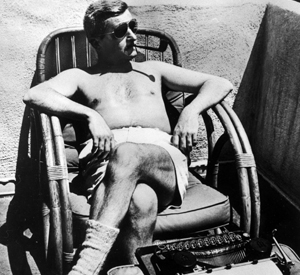
An American Childhood- Annie Dillard

An American Childhood is Annie Dillard's memoir of growing up in Pittsburgh in the 1950's. I read this book because I had been rampant in thought and engrossed and emotionally invested in Catcher and its themes, and had loved the discussion- I didn't feel ready and simply did not want to leave Catcher in the dust. Here I found a novel that promised a complete and reliable account of growing up (she explores every phase- beginning at 5 and ending when she is getting ready to leave Pittsburgh at 17) that was sure to touch on Catcher ideas ( becoming awake, truth, illusion, leaving childhood etc.) and also come from a truly remarkable and insightful voice, as Annie Dillard's work has always seemed to me.

Dillard tells the story of her childhood "interior life" through a sharp and observant lens that combines her childhood personality and perspective of the time with ominous insight that comes from looking back as an adult. The experiences she recalls are perhaps universal and unremarkable in terms of what childhood is (filling the gaping holes of boredom with imagination: inventing games and ideas, playing in the woods, being with friends, being alone, reading and learning and exploring that knowledge in the real world- She was more intelligent than I am now in many ways at only 9 years old, reading books about insects and birds and rocks and butterflies and adventuring to explore them in the real world, identify them, collect them, explain them as an expert...) but she somehow takes the ordinary and turns all of her experiences into remarkable comments on life. Ultimately, (although it may sound cheesy or cliche) I think the novel celebrates just living life, curiosity, and the wonders of the world- what life has to offer- how we perceive those possibilities as we are young and when we become older, what nature and history and the world can be, the vastness of exploration. She is close to concluding the novel when she writes, "And still I break up through the skin of awareness a thousand times a day" (250). The novel begins when she is 5 and bewildered and entranced by life, and I think it ends in the same way.

I love this book and I know I will revisit it frequently. I do think it is the kind of novel that you can read again and again and at different times discover something new and extraordinary in every read (I feel that I have only absorbed a mere fraction of the books depth in this week), or just purely enjoy it every time, if only to put it down marveling at Annie Dillard as an author herself. While the childhood stories she tells may seem light and unremarkable, the ideas and the insight that come with them seemed to me as profound and heavy, and at times I had to put it down in order to really absorb what she was saying and consider what I thought of it. If anything, her prose give you everything to think about.

Annie Dillard's language in this book is so beautiful and spirited that I found myself reading slower and slower as I went. Her story is the "American Childhood" and I think that most everyone will see a piece of their childhood reflected in hers, or a piece of her anywhere from innocence to adolescence inherent in themselves. The New York Times comments on this book, Annie Dillard is one of those people who seem to be more fully alive than most of us, more nearly wide awake than a human being generally gets to be". This is exactly what the book is like. If nothing else, I would genuinely want to read any and every book that entails being told a story from a like perspective.

Amazon Link: http://www.amazon.com/American-Childhood-Annie-Dillard/dp/0060915188

The Unbearable Lightness of Being by Milan Kundera

Amazon link: http://www.amazon.com/Unbearable-Lightness-Being-Milan-Kundera/dp/0060932139

I thought about how I would summarize the novel but I decided that it was pretty much impossible to really give this novel a summary, so I’ll just tell you the fundamentals of the story and just trust that you understand. Basically it is about these four people and their tangled, intricate relationships with one another in a time where the world is fighting against each other. However, through these four characters Kundera portrays his philosophy of life. Thus, the novel becomes not very plot based but more involved in the workings of the mind and society—especially in the ideas of lightness and weight.
The thing that ultimately prompted me to choose this novel was its title. It just seemed so poetical and almost dream-like that I couldn’t resist. Thankfully, the rest of the text followed the title perfectly. Kundera is able to craft a novel on the basis of beautiful, yet horrifying dreams and thoughts, and trigger many emotions and explain many phenomena through his use of striking language.
My one complaint of this novel would be that Kundera is too forward with his interpretations of his characters. I can see how Kundera is exploring his characters and philosophies whilst writing the novel and that his statements of what each action means is just him trying to find the answers himself but, I wish that not all his interpretations would be in the text but rather subtly inserted so that it can be left up for interpretation.
The novel was very thought-provoking and ultimately I believe that Kundera creates a novel that I look at as a masterpiece. I would not however recommend this to everyone. One who reads this novel I believe has to be patient since it is not very plot oriented but rather more focused on the complex ideas of the individual and society. Kundera contradicts the traditional, clear, organized form of a novel and instead crafts a book that acts almost as a record of the stream of consciousness for four characters, with the occasional statement by the author (which reminds us that these characters are rather a continuation of the thoughts that are in his mind).

The Green Mile (from Greg)

Greg's account was not working so I'm posting it for him:


Amazon Link
http://www.amazon.com/Green-Mile-Six-Box-Set/dp/0451933028/ref=pd_rhf_p_t_1

The Green Mile By Stephen King

With a mix or brutal tragedy and sophisticated details, The Green Mile by Stephen King will remain one of my favorite books of all time. Set on "death row" in a 1930's prison (Cold Mountain Penitentiary), the story depicts both the miraculous and tragic events that surround one man, John Coffey, one of the rows temporary residents. The story told by Paul Edgecomb, the wings head honcho prison guard, who is reflecting on it some decades later from his own "death row". While the story will undoubtedly stretch your most innermost beliefs, it will do so in a way that is both memorable and emotional. You will be attached both emotionally and physically from cover to cover and beyond.

Another notable aspect of the story is the fact that it deals entirely with the conflicts between individuals and society, as well as individuals with themselves. I suppose that this story is as much a tool of education as it is a tool to provoke thought. Like in Mrs. Parrish's book, the characters were, for the most part, very realistic (you'll understand the "for the most part", after you've read it). One character in particular, Percy Whitmore, is the most dislikable human being I have ever been forced to acknowledge. This is the same for his counterpart, Brad Dolan, who is easily as dislikable if not more so in the end of the story. John Coffey on the other hand, couldn't be more likeable and human despite his gifts. What are these? You ask. You will just have to read to find out.

Treatise On Harmony by Jean-Philippe Rameau

Amazon Link: http://www.amazon.com/Treatise-Harmony-Jean-Philippe-Rameau/dp/0486224619/ref=sr_1_1?ie=UTF8&s=books&qid=1262553110&sr=8-1

As any student of musical composition will tell you, Rameau's Treatise On Harmony is one of thee most important books in the history and development of Western Music. The Treatise was originally published in 1722, during the late Baroque era in which galant-like--chordal (homophonic) melodies that worked to better distinguish the harmonic structure of a piece--pieces were beginning to be introduced. What made Rameau's first Treatise so significant during this period was his introduction of concepts such as that the triad is the most fundamental element in harmony, all melody is rooted in harmony (although this is not to be taken too seriously as Rameau makes it clear that this rule is based more on musical expression rather than the practice of composition), the tonic chord and the dominant chord are necessities in functional, tonal harmony, and chordal inversion in chordal succession that would become the basis of harmonic structure and theory for the next two hundred years.

The Treatise is separated into four books; the first contains mathematical explanations and "proof" of the concepts that Rameau goes on to explain in the other books. The second book is by far the most important and controversial as it explains many of the concepts I previously mentioned and serves as the basis for all tonal harmony. Book Three takes what was explained in previous books and demonstrates how to use such techniques in the practical method of composition. The last book is merely (and I do mean "merely") a practical guide to accompaniment on the harpsichord or organ which contains chapters such as "On how to find Chords on the Keyboard" and then some discussion on reading a figured bass.

The translation from French to English by Philip Gossett makes this book palatable seeing that Rameau's prose is dense, contains errors in syntax and is repetitious and disorganized. Gossett, without taking too much liberty over Rameau's language, makes most of the Treatise easy to understand given that one understands the concepts being explained. However, the first book is extremely difficult to comprehend, even in translation. Acknowledging that this is a result of Rameau's lack of ability to articulate the concepts, Gossett provides a section in the Translator's Introduction in which he explains the fundamentals of Rameau's mathematics and although he himself admits that "In several cases I have not been completely satisfied that I have understood Rameau's meaning, even after consultation with other scholars", I found Gossett's explanation of the basis of Rameau's mathematics to been incredibly helpful (and I'm awful at math so take my word that the math is really only elementary level algebra). Gossett provides his own notes as well as Rameau's notes from the originally included supplementary that prove to be extremely helpful in understanding the text as a whole. Despite the lack of organization of the text--which is accountable to Gossett's own discretion as not to stray too far from the original form of the text--I truly believe that this is the best translation available.

If you are interested in this book, however, I must warn you that it is not a great source to learn compositional techniques and theory from. I would never suggest this book to a beginner; even though the third book provides an adequate explanation of basic theory and voice-leading, I would argue not only that some of Rameau's theories are blatantly false (such as his modal theories and theories concerning the ninth chord) because of the lack of experience with those theories at the time, but that learning theory and composition is not the purpose for this book (not in this time period at least). Rather, one should read this book with at least a basic knowledge of Guidonean and later Medieval music--history and theory--and should have a firm understanding of modern compositional theory as not to be confused by Rameau's arguments. If one has such knowledge, this book's historical significance is more than clear and invites multiple re-readings in an attempt to truly understand the basis of Rameau's theoretical genius. I know I will be forever returning to this text.

Olive Kitteridge by Elizabeth Strout

Amazon link

I had been meaning to read Olive Kitteridge for a long time. It is a novel comprised of inter-connected short stories that all concern, at least indirectly, Olive Kitteridge, a somewhat gruff, aging (by the end of the novel retired) middle school math teacher. The novel reminded me a bit of Sherwood Anderson's Winesberg, Ohio in that the town itself is perhaps as much of a character as it is a setting.

I think that what Strout does with the town and with Olive, the only character to appear in each story, is interesting, but I'm a little bit wary of the structure of the novel and the potential it has to be gimicky. I found myself wondering how, if at all, the novel was better served being told in short stories through a variety of limited-3rd person points of view. If Strout's aim was to make the novel about the town (rather than, say, about Olive) or about the process of aging, settling, redefining expectations in old age, then the stories could potentially reveal things that a more traditional narrative couldn't. On reading the novel once, however, I am not convinced that the town of Crosby IS central to the novel in any way other than as the setting.

Ultimately, the characters were subtle and felt real (especially Olive who I found realistically unlikeable) but to me the tone was also a bit sanctimonious. Whether this was deliberate in the author's attempt to make every aspect of the text (including language, perhaps) sharpen our understanding of Olive was not clear to me. I would not put this on the top of a list for all of you, though I absolutely found the writing itself to be clean, thoughtful, even beautiful at times.

Saturday, January 2, 2010

Ellen Foster

Amazon link: www.amazon.com/Ellen-Foster-Kaye-Gibbons/

Ellen Foster is a book written by Kaye Gibbons and involves a young girl named Ellen whos mother dies and father is an abusive alcoholic. Once her father dies, Ellen is orphaned and is tossed from foster home to foster home, while she is hoping to achieve a new beginning and new identity. This book is similar to The Catcher in the Rye in many ways- through diction, word choice, plot and personal voice, Ellen is very similar to Holden. Gibbons' novel explores many complexities of Ellen's character but articulates them in a way that makes the audience believe these thoughts and emoitions are coming from an eleven year old girl. Overall, this book was enjoyable, and I would reccommend it to others in our class. Having read Catcher in the Rye prior to this book, I was able to make many connections and similarities that I would have otherwise overlooked.

-Kara