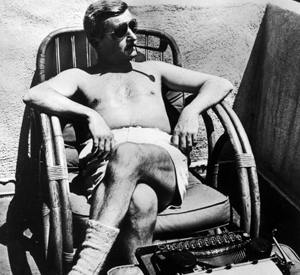
Think about the subtitle of The Scarlet Letter. In what ways is this text "a romance"? What, if any, relationship, is there between "romance" and Romanticism?
If you are unfamiliar with Romanticism as a literary movement, please read the following background information:
http://www.wwnorton.com/college/english/nael/romantic/welcome.htm
(Byron features prominently)
In Harold Bloom's introduction to Modern Critical Interpretations: Nathaniel Hawthorne's The Scarlet Letter, he writes: "Pearl...is the romance's prime knower no reader would doubt. The subtlest relation in Hawthorne's sinuously ambiguis romance is not that between Chillingworth and Dimmesdale. It is the ambivalent and persuasive mother-daughter complex in which Hester is saved both from suicidal despair and from the potential of becoming the prophetess of a feminist religion only by the extraordinary return in her daughter of everything she herself has repressed" (Bloom 4).
Opening the exploration to any of the major four characters in the novel, what specific passages do you see that highlight the extent to which Hawthorne was influenced by romanticism? What tension(s) are illuminated, complicated or otherwise illustrated by Romanticism (or vice versa)?
Tuesday, November 17, 2009

Wednesday, November 11, 2009
Shame as Control (and a few announcements)
It seems that the combination of my being out, your presentation yesterday during class and today being a day off school has kind of thrown things into confusion. Tomorrow I need to collect your passages so that we can do the class activity I have planned. We can push the class activity until Friday if need be, but please bring those to class tomorrow so that I have time to photocopy them. (This is all explained on that note I left for you with the sub.)
For the blog tonight if you knew to post--I would like you to search though what you've read so far for evidence of Hawthorne's opinion on the public shaming of Hester as a means of discipline (or control to use the same word we used when discussing the Crucible). We will talk more about the idea of public shame tomorrow, in the general sense, but for now I want to begin the conversation with the text itself. So--what is Hawthorne saying about this as a practice?
Also: announcement incase you did not see it--ghost papers postponed until Monday, Scarlet Letter revised reading schedule coming soon and explanation of major assignment for Scarlet Letter to come shortly thereafter.
Monday, November 9, 2009
Chapter 2: "The Market-Place"
"In either case, there was very much the same solemnity of demeanour on the part of the spectators; as befitted a people amongst whom religion and law were almost identical, and in whose character both were so thoroughly interfused, that the mildest and severest acts of public discipline were alike made venerable and awful" (Hawthorne, 37).
This quote does a great job of summing up Puritan society, and you will see instances of the intertwining of law and religion throughout the novel. Consider these questions:
This quote does a great job of summing up Puritan society, and you will see instances of the intertwining of law and religion throughout the novel. Consider these questions:
- While reading The Crucible, we talked about the ability of various opposing/seemingly related ideas to coexist. Do you think that morality and law coexisted in Puritan society? Is morality synonymous with religion in Puritanical society? Is morality always synonymous with religion?
- Why do you think religion played such a huge role in the Puritan's lives? Could it be kind of like the glue of their society? With this in mind, why were Puritans like Hester Prynne so harshly punished and frowned upon by their neighbors?
- Is it possible to be an individual in this strict society? Think about Hester's presence as she stands on the scaffold with her child.
Thursday, October 29, 2009
The Crucible Continued
After two days of student-led presentations, we still have a lot to say about The Crucible. While I am asking you to write a formal response as part of your summative grade for the discussion, I also want to encourage you to continue your discussion of the text as a class. Please respond with one specific piece of textual evidence that you think illustrates an important duality or paradox in The Crucible. We have spoken, for example, about light and dark, morals and laws, the Church and witchcraft, the town and the forrest, etc. Jung's archetypes may (or may not) be useful in considering the symbolic nature of some of these dualities, but what does examining these dualities or paradox contribute to your overall understanding of the play?
Sunday, October 18, 2009
What is "American Literature" anyway?
Over December break, I'm going to ask you each to choose a piece of American literature to read in small groups... But the article below raises the question: what can be classified as American literature?
http://www.nytimes.com/2009/10/18/weekinreview/18schillinger.html?_r=3&ref=weekinreview
http://www.nytimes.com/2009/10/18/weekinreview/18schillinger.html?_r=3&ref=weekinreview
Thursday, October 15, 2009
Questions
Ask me a question about Gatsby! (No har har questions, please)
ps-thank you to everyone who did not comment on the missing letter "k" in this post.
ps-thank you to everyone who did not comment on the missing letter "k" in this post.
Wednesday, October 14, 2009
Chapter VIII
As opposed to earlier chapters, where time seems to by almost halted, in this chapter the reader sees time as "running out". How does Fitzgerald use foreshadowing, imagery, and vocabulary to convey this very important point to the reader?
(A quote to spark some thinkin')
"I jumped out of bed and began to dress--I felt I had something to tell him, something to warn him about and morning would be too late" (Fitzgerald, 154)
(A quote to spark some thinkin')
"I jumped out of bed and began to dress--I felt I had something to tell him, something to warn him about and morning would be too late" (Fitzgerald, 154)
Subscribe to:
Posts (Atom)